
. . . then Master
We would like to encourage you to extend your Bachelor's degree with a Master's degree, as the Master's qualification will bring you up to the level of your former engineering degree or even a little further. The Master's degree course is designed to last 4 semesters and provides a technical and scientific specialization in a chosen field of study. Only the Master's degree qualifies you for further scientific profiling as part of a doctorate in engineering (Dr.-Ing.).
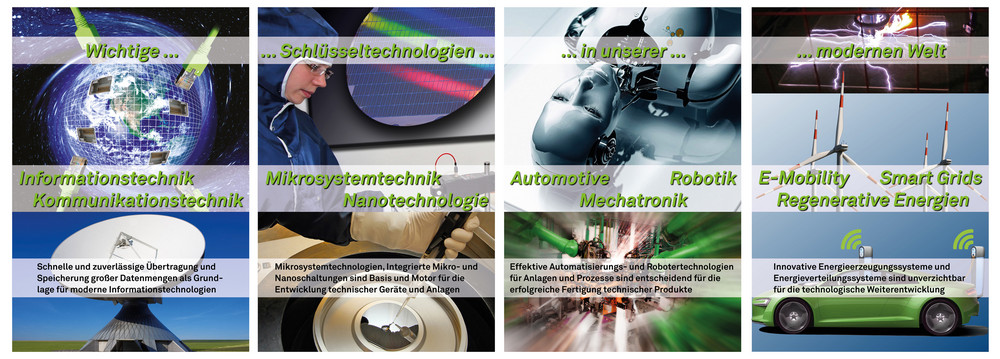
As part of the Master's degree course in Electrical Engineering and Information Technology, we offer you four specializations:
-
Electrical power engineering
-
Information and communication technology
-
Microsystems technology and microelectronics
-
Robotics and Automotive
In defining these four specializations, we have been guided by the desire to offer four meaningful and sufficiently broad fields of study to enable you to apply for a larger number of positions on offer. Within the major fields of study, there is then further opportunity to select modules that correspond to your own interests. For our two preceding Bachelor's degree courses, this Master's degree course (and also the English-language Master's degree course "Automation and Robotics") applies without restriction as a consecutive degree course, which can be continued directly with the Bachelor's degree and is legally considered to be vocational training together with the Bachelor's degree course. You can choose various specializations from those offered and earn credit points in these.
You determine these specializations by selecting the basic or compulsory elective modules and the Master's thesis. As you can see from this, a free choice of specializations is guaranteed that largely corresponds to your personal interests.
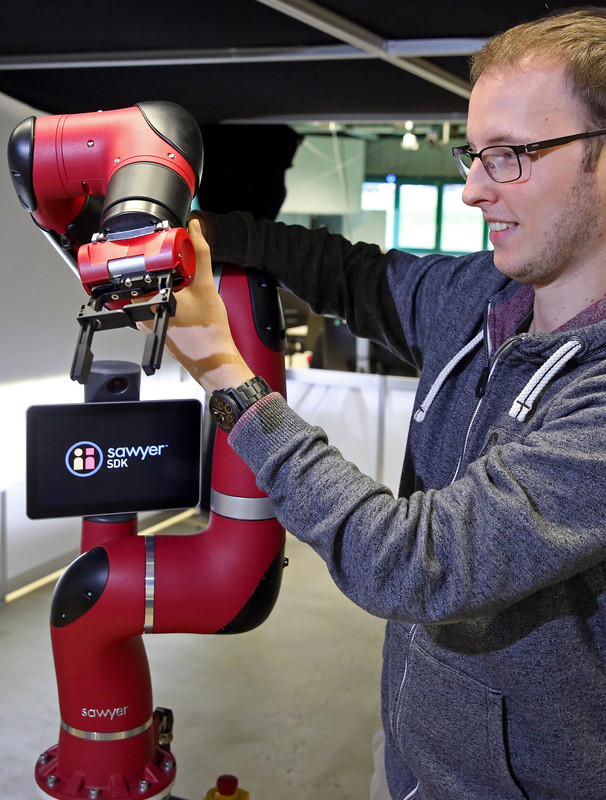
In project work, overarching tasks are structured in a team, solved together in subtasks and the partial solutions are combined to form a whole. The same applies to project work and Master's theses: You choose the topic and the supervising chair. The topics for these theses are often developed together with the candidates and here too the topics are regularly part of the chairs' research or industry projects.
In the first semester of the Master's degree course, compulsory elective modules and practicals on "Modeling and Simulation" are planned and you must select them according to your chosen specialization. Modeling and simulation" in particular are of the utmost importance in modern electrical engineering and information technology. This becomes clear when you think, for example, of "modeling" electronic circuits or modeling electronic networks or "describing the behavior" of autonomous robots. In the 2nd and 3rd semesters, the basic and compulsory elective modules directly assigned to the four specializations and the project work follow, while the 4th semester is entirely dedicated to your Master's thesis.
It goes without saying that you can also work as a student assistant on the Master's course - now at an even higher level - on research projects at the chairs. A stay abroad is also possible on the Master's degree course and the ECTS (= European Credit Transfer System) also helps to have academic achievements recognized.
We strive to ensure that as many of our Bachelor's graduates as possible also take the Master's degree course, as the Master's degree is an important starting capital for the graduates' professional future and is also an important investment for the industrial development of the country.
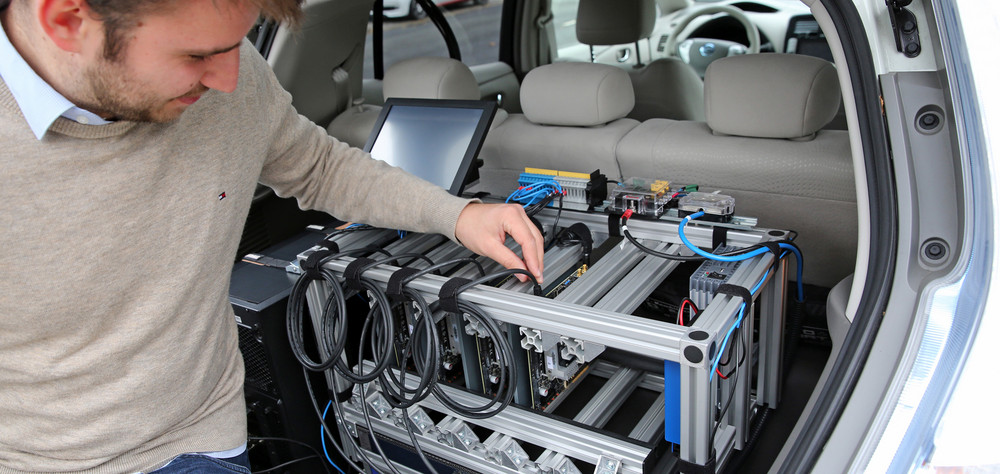
Of course, you are also very welcome if you decide to study for a Master's degree with us and already have a Bachelor's degree from another university. Our research profile (find out more on our website), the particularly high quality of supervision in our degree program or simply your interest in TU Dortmund University and our department may speak in favor of such a change. In the event that individual subject requirements are missing, we recommend that you take the missing subjects as part of a preparatory semester.
Our academic advisor will help you directly with such questions or, if necessary, put you in touch with a contact person.
You can also find a detailed description of the Master's degree course with subjects, semester hours per week and credit points on our website.